
Table of Contents
Introduction
Artificial intelligence (AI) is no longer just a futuristic idea—it has become one of the most powerful forces shaping the global economy today. From multinational corporations leveraging AI to streamline operations to small businesses adopting automation tools, AI is transforming the way the world works.
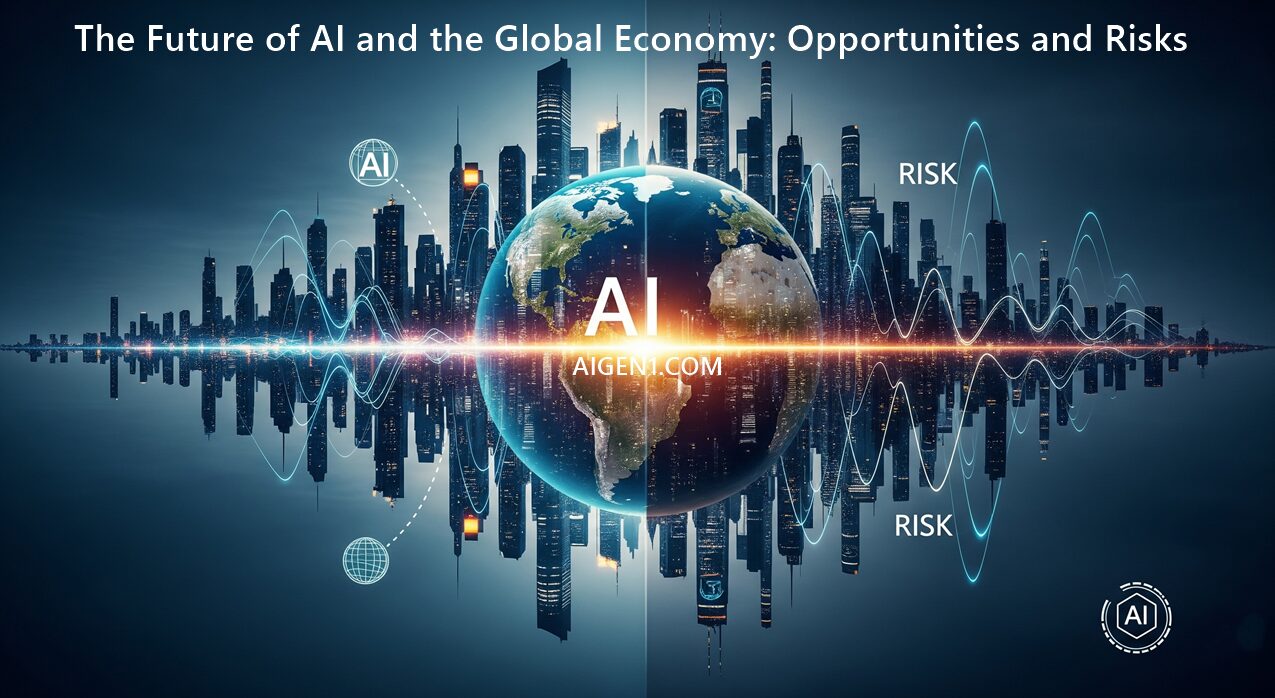
The conversation about AI’s impact on the global economy isn’t just about growth and opportunity, but also about the associated risks and challenges. While AI fosters innovation, efficiency, and the emergence of new industries, it also brings concerns about job displacement, increasing inequality, and ethical dilemmas.
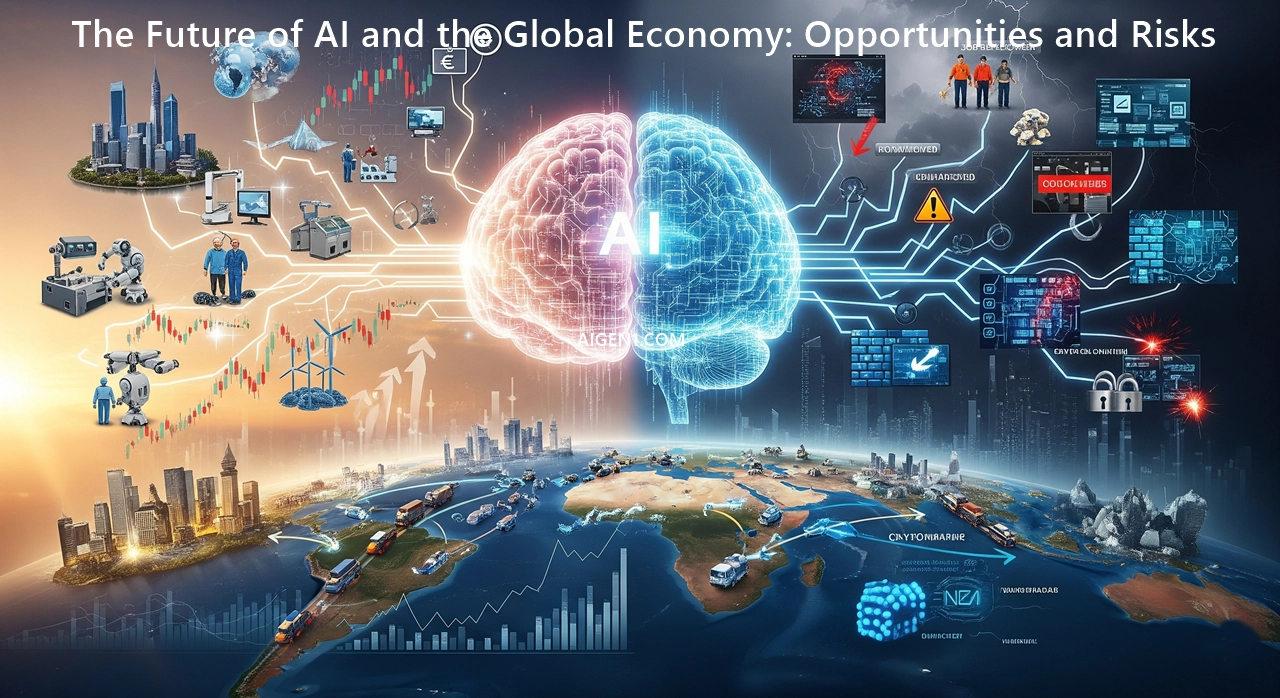
In this article, we will explore how AI is changing the global economy, the opportunities it presents, the risks it carries, and what the future might look like as artificial intelligence becomes even more integrated into our lives.
The Role of AI in the Global Economy
AI has already become a critical driver of global economic growth. Based on a PwC analysis, AI could contribute over $15 trillion to the global economy by 2030, positioning it as one of the most transformative technologies in human history. To read more about this analysis, you can refer to the PwC report on AI and economic growth.
Key ways AI is influencing the economy include:
- Automation of tasks in manufacturing, logistics, and services.
- Enhancing decision-making through big data analytics.
- Improving productivity by reducing human error and increasing efficiency.
As countries compete to become leaders in AI, the technology is also becoming a matter of global economic strategy and geopolitical power.
Opportunities: How AI Can Boost the Global Economy
Increased Productivity
AI can perform repetitive and data-heavy tasks faster and more accurately than humans. This allows companies to reallocate human talent to higher-value activities such as strategy, creativity, and customer engagement.
New Industries and Jobs
Emerging fields like AI ethics consulting, machine learning engineering, and robotics maintenance are generating jobs that did not exist a decade ago.
Better Healthcare Systems
AI-driven diagnostics, personalized medicine, and robotic-assisted surgeries are transforming healthcare. A healthier population contributes to a stronger, more productive workforce, which in turn fuels economic growth. To learn more about how AI is revolutionizing healthcare, you can read our article on Healthcare AI: Revolutionizing Diagnosis & Treatment.
Smarter Global Trade and Logistics
AI improves global supply chains by predicting demand, reducing waste, and optimizing delivery. Companies like Amazon and Alibaba are already using AI to manage millions of daily transactions worldwide.
Financial Innovation
In finance, AI powers fraud detection, algorithmic trading, and personalized banking. This improves economic efficiency while making financial services more accessible across the globe.
Risks: The Challenges AI Brings to the Global Economy
Job Displacement and Inequality
The biggest concern is automation replacing human workers. Jobs in the manufacturing, retail, and administrative sectors are particularly vulnerable to automation. This could widen the gap between highly skilled workers who thrive in an AI-driven world and those who are left behind.
Concentration of Power
AI development requires massive resources. This means power may concentrate in the hands of a few global tech giants and advanced economies, leaving developing nations at risk of being marginalized in the global economy.
Ethical and Privacy Concerns
AI systems often rely on vast amounts of personal data. Without proper regulation, this could lead to privacy violations, surveillance issues, and the misuse of personal information on a global scale.
Cybersecurity Threats
As economies become more reliant on AI and automation, they are also more vulnerable to cyberattacks. A single AI-powered cyberattack could disrupt global supply chains or financial markets.
Uncertain Regulations
The global lack of consistent AI regulation creates confusion and potential conflicts. Without global cooperation, AI could be misused, leading to economic and political instability.
AI and Developing Economies
On one hand, AI could help emerging markets leapfrog traditional development stages by providing access to smart healthcare, agricultural automation, and digital education tools. On the other hand, limited access to advanced technology and infrastructure could mean these nations fall further behind, deepening global economic inequality. The challenge will be ensuring that AI adoption is inclusive and globally distributed.
AI and the Future of Global Business
Global companies are already using AI to stay competitive:
- Retail giants use AI for personalized shopping experiences.
- Healthcare companies use AI to accelerate drug discovery.
- Banks and fintech firms use AI to analyze transactions and manage risks.
In the future, businesses that fail to adopt AI may find themselves at a severe disadvantage in the global marketplace.
The Future Outlook: AI and the Global Economy by 2030
Looking ahead, AI will play an even bigger role in shaping the global economy. Some predictions include:
- AI contributing to global GDP growth of up to 14% by 2030.
- Smart cities powered by AI optimizing energy, transportation, and waste management.
- Global trade becoming more seamless through AI-driven logistics.
- Wider adoption of AI in education, creating a more skilled global workforce.
- Continued debates over ethics, regulation, and the balance of human vs. machine labor.
Frequently Asked Questions (FAQ)
- 1. How will AI impact the global economy?
- AI is expected to add over $15 trillion to the global economy by 2030, boosting productivity, innovation, and efficiency across industries.
- 2. What opportunities does AI create for businesses?
- AI creates opportunities in automation, healthcare innovation, financial services, global logistics, and the creation of new industries and jobs.
- 3. What are the biggest risks of AI in the global economy?
- The main risks include job displacement, inequality, cybersecurity threats, and lack of global regulation.
- 4. Will AI replace human workers completely?
- AI will replace some repetitive jobs but also create new ones. The future workforce will need to adapt by gaining skills in AI-related fields.
- 5. How can developing countries benefit from AI?
- Developing nations can benefit from AI in agriculture, healthcare, and education, but they need infrastructure and investment to avoid falling behind.
Conclusion
The connection between AI and the global economy is intricate. AI brings amazing possibilities for growth, new ideas, and better efficiency. However, it also comes with challenges like job losses, inequality, ethical concerns, and cybersecurity risks.
As AI spreads across the world, the key is to make sure its benefits reach everyone, not just a few countries or companies. The future of the global economy depends on balancing innovation with responsibility and fairness. AI is here for good, and its impact on the global economy will keep growing in the coming years.

Post navigation
Previous Post
 The Future of Robotics: From Industry to Everyday Life